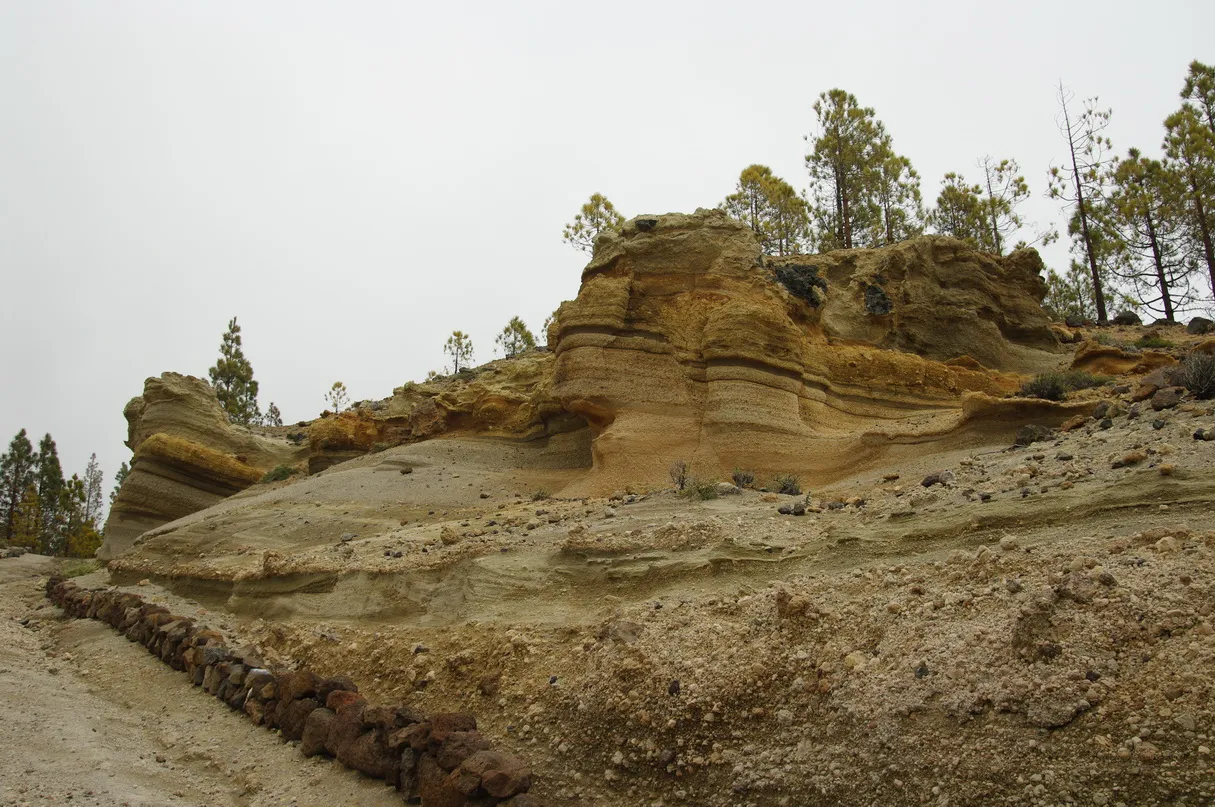
The Paisaje Lunar — the lunar landscape — is a cluster of pale, free-standing rock pinnacles high above the village of Vilaflor, on the southern slopes of Teide. It looks nothing like the rest of Tenerife, and it is the longest drive in this guide.
What you are looking at
Despite the name, this is not a volcanic crater or a lava field. It is erosion.
The rock is pumice — light, pale, soft material laid down in explosive eruptions long ago. Water running down the slope has cut into it over millennia, carving out the softer parts and leaving columns standing where a harder cap protected the rock beneath. The result is a field of tapering white cones, some several metres tall.
It is the same process that makes the hoodoos of the American southwest, in volcanic rock rather than sandstone.
Be realistic about the day
From San Marcos this is a serious drive: south and up, well over an hour each way, and then a moderate walk at around 2,000 metres.
We would rather say that plainly than pretend it is a casual outing. If you are staying on the north coast, treat this as one full day, ideally combined with Teide itself, which you drive through to get there.
Altitude and sun
At this height the air is thinner, the sun is much stronger and the temperature swings hard between sun and shade. Water, a hat and sun cream are not optional, and a layer for the top is sensible even in summer.
There is very little shade on the route.
Getting there
Drive up through Vilaflor, the highest village in Spain and the usual starting point. Set off early: it is the only way to do the drive, the walk and the return in comfortable daylight.