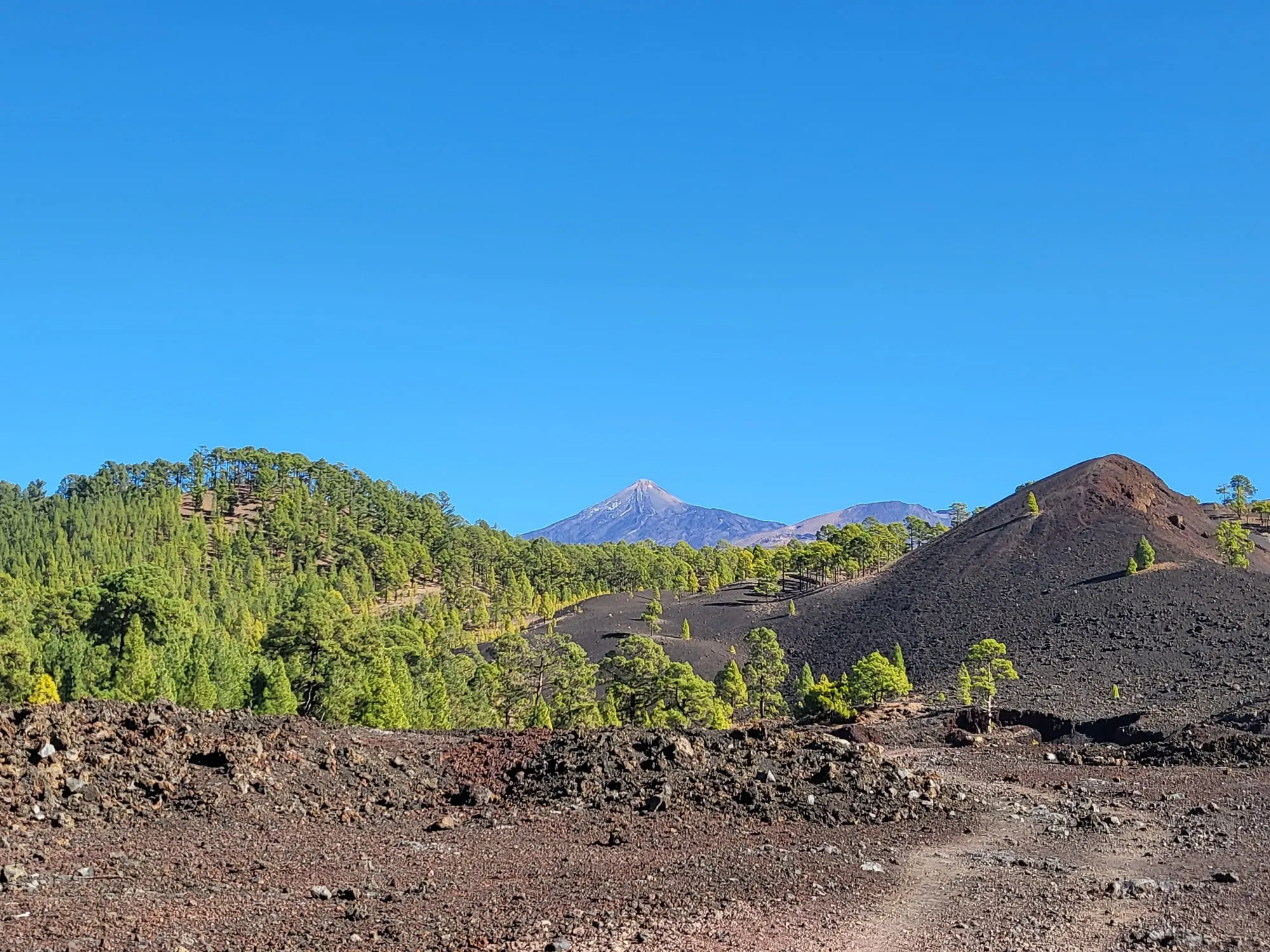
Arenas Negras is the shorter walk in the volcanic country above Santiago del Teide: about an hour and a half, over black volcanic ground, with Canary pine growing through it. Our hosts list it as the easier alternative to Chinyero, and that is exactly what it is.
When to choose it over Chinyero
Chinyero takes around two and a half hours and crosses genuinely rough lava. Arenas Negras takes about ninety minutes over softer ground. If you are walking with children, starting late, or simply do not want the day to become an expedition, take this one.
The scenery is not a compromise. You are in the same reserve, in the same pine-and-lava landscape, looking at the same slopes of Teide above you.
What “black sands” means
The name is literal. This ground is volcanic ash and lapilli — the fine and pebble-sized material thrown out in eruptions — rather than the solidified flows next door. It walks more like a beach than a rock field, which is most of why it is easier going.
Practicalities
Around forty-five minutes by car from the apartment. You are climbing several hundred metres above the coast, so take a layer even if you left San Marcos in shorts; cloud and wind arrive quickly at this altitude.
Water and real shoes. There is no shade to speak of once you are out of the pines.
Where it sits in the day
Because it is short, Arenas Negras combines well with other things rather than filling a day on its own. The drive up passes Santiago del Teide, and continuing east from there puts you on the road into Teide National Park — so the natural pairing is a morning walk here and an afternoon at altitude, or the reverse.
If you would rather stay closer to the coast, the drive back down through Garachico gives you a late lunch in a town that was buried by lava in 1706, which is a reasonable way to finish a walk across an eruption.
Underfoot
Ash and lapilli give way underfoot slightly, a bit like walking on coarse sand. It is easier on the feet than the sharp lava at Chinyero but slower going uphill than a firm path would be.
Closed shoes rather than sandals — the grains are volcanic and they get everywhere.